Hockey is simple at its core: two teams compete to score more goals than their opponent. Getting there, however, involves speed, strategy, teamwork, and a whole lot of rules. Here's everything you need to know to understand what's happening when you watch a game.
Objective of the game
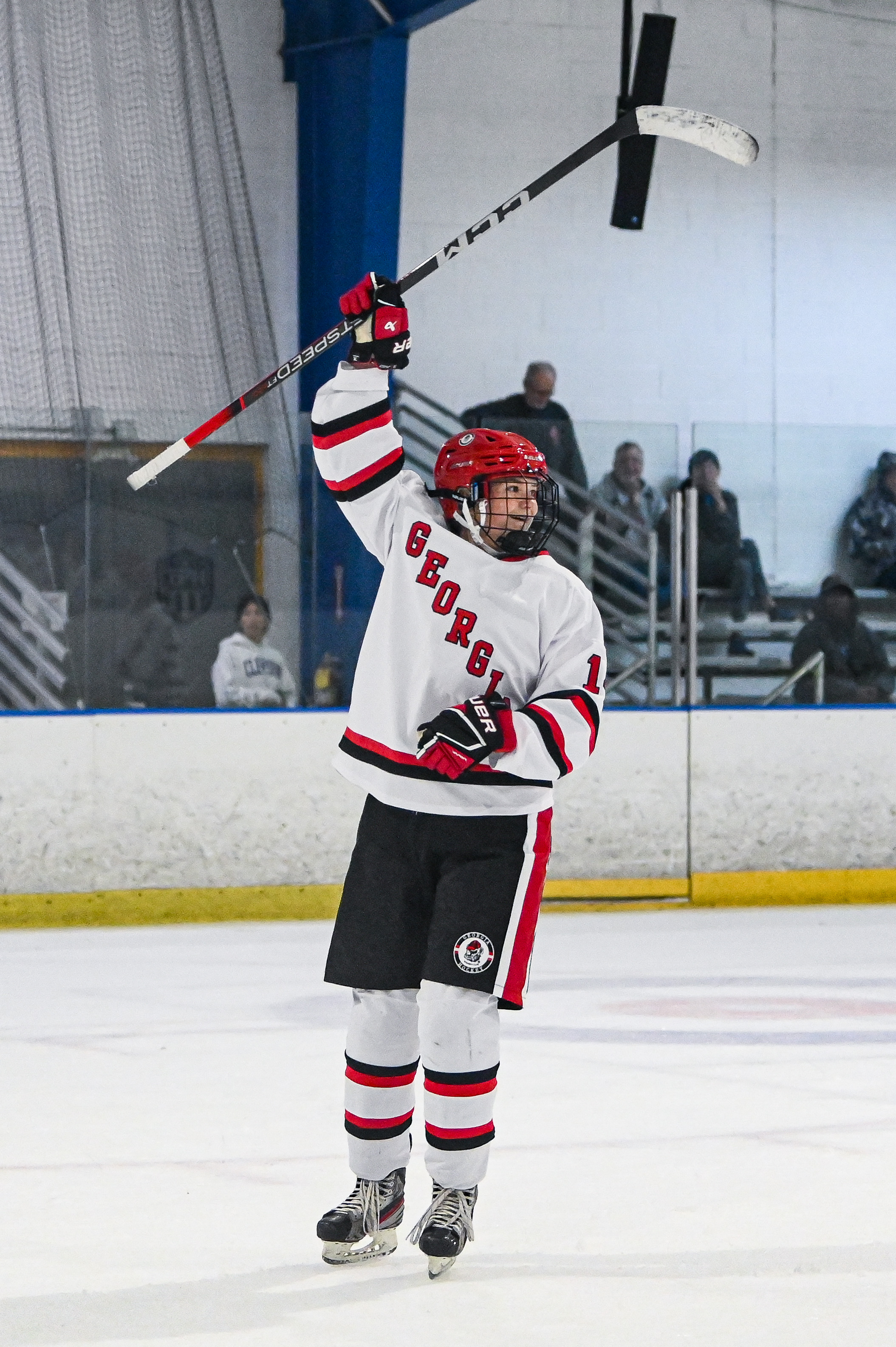
The objective of hockey is simple: score more goals than the opposing team. Players use their sticks to pass, carry, and shoot a small rubber puck into the opponent's net while trying to keep the other team from scoring on their own. Teams have both offensive and defensive responsibilities, and players constantly transition between the two as the puck moves around the rink. At the end of the game, the team with the most goals wins.
How to win:
- Score more goals than the other team
- Play better defense than the other team
- Make fewer mistakes than the other team
The basics:
- 2 teams
- 1 puck
- 2 nets
- 3 periods
- 6 players per team*
- 1 goalie
- 2 defensemen
- 3 forwards
*During even strength play
Periods
A regulation hockey game is divided into three periods, each lasting 20 minutes at the collegiate and professional levels. The clock stops whenever play is interrupted, so a period takes longer than 20 minutes in real time. Between periods, teams leave the ice for an intermission while the rink is resurfaced and players get a chance to rest and regroup. If the score is tied after regulation, the rules for overtime depend on the league and level of play.
Scoring
A goal is scored when the puck completely crosses the goal line between the goalposts and underneath the crossbar. Goals can happen in all kinds of ways: a player might fire a powerful shot from the blue line, sneak the puck past the goalie from close range, redirect a teammate's pass, or score on a rebound. Every goal counts as one point for the team, no matter how it is scored.
What is an assist? The player or players who helped create the goal can also receive an assist. Usually, the last two teammates to touch the puck before a goal are credited with assists.
Offside
Offside happens when an attacking player enters the offensive zone before the puck does. The blue line separates the neutral zone from the offensive zone, and the puck must cross that line before the attacking players. If a player crosses the blue line too early, play is stopped and a faceoff takes place outside the offensive zone. In other words: the puck has to enter the zone before the players do.
Icing
Icing occurs when a player shoots the puck from behind the center red line all the way past the opposing team's goal line without another player touching it. When icing is called, play stops and a faceoff takes place back in the offending team's defensive zone. The rule prevents teams from simply sending the puck to the other end of the rink whenever they are under pressure.
Why does it exist? You can't just yeet the puck down the entire rink to get out of trouble.
Penalties
Players can be penalized for breaking certain rules, such as tripping, hooking, holding, slashing, or making illegal contact with an opponent. Most common penalties result in the offending player spending two minutes in the penalty box, leaving their team shorthanded. More serious infractions can result in longer penalties or a player being removed from the game.
Power Play
When one team has a player in the penalty box, the opposing team has a power play and an extra skater.
Penalty Kill
The shorthanded team is on the penalty kill and tries to prevent the other team from scoring.
Positions
Goaltender
The goaltender, or goalie, is the last line of defense. Their primary job is to stop the opposing team from scoring and control rebounds whenever possible. Goalies use specialized equipment and have a unique position on the ice.
Defense
Defensemen protect their team's end of the rink and work to stop opposing attacks. They also help transition the puck out of the defensive zone and can contribute offensively through passing and shooting.
Center
The center is involved in almost every part of the game. Centers take faceoffs, support their defense, help create offensive plays, and constantly move between the offensive and defensive zones.
Wingers
Wingers play on either side of the center. They often work along the boards, create scoring opportunities, and help maintain offensive pressure in the opposing zone.
Note: Positions are not rigid. Hockey players don't simply stay in one spot on the ice. Players constantly move, switch responsibilities, and cover for one another depending on where the puck is. Understanding the basic positions is helpful, but watching how players move together is the most important thing.